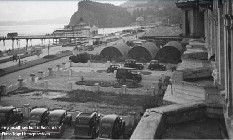

Crew of HMS Defiance. Photo Cyberheritage

Petty Officer Leonard Arthur Churchill
Royal Navy, HMS Marlborough, (later transferred to) HMS Vivid
Died in Military Service
Date of Birth: 1878
Place of Birth: Teignmouth, Devon
Date of Death: 14 April 1915 aged 35
Buried: Kingskerswell Churchyard, Devon. Remembered on Kingskerswell Memorial, Seafront Memorial and St. James' Church Memorial Window, Teignmouth.
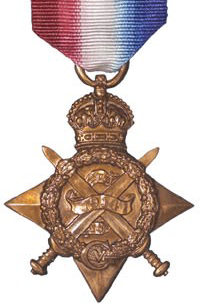
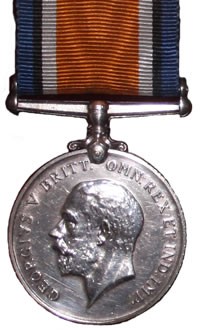
Awarded the 1914 Star, the British War Medal and the Victory Medal
Petty Officer (1st Class) Leonard Arthur Churchill, age 35.
Born in 1878 at 6 Sun Lane, Teignmouth to Samuel and Mary Churchill, he was baptised at St. James’ Church on 30 January 1879. In 1891 his father, Samuel, was a Senior Postman at Teignmouth. He married Lydia Thomas Duder in 1902 and they had three children, Albert George was born in 1903, Lillian Fanny in 1904 and Lydia Grace in 1906
Leonard joined the Royal Navy on 13 September 1897, aged 18, service number 195562. He passed his P.O.’s exam in September 1907. On 15 January 1914 his wife, Lydia, died during an operation and was buried in Kingskerswell Parish Churchyard; the family had been living in Kingskerswell.
Leonard appeared on 1911 census serving as a Leading Seaman on board HMS Collingwood, one of the first ‘Dreadnought’ class battleships.
In 1915 Leonard was serving on board HMS Marlborough in Scapa Flow, but was transferred to HMS Vivid, Devonport Shore Base, where, on 14 April 1915 , Leonard died of malignant encarditis (rheumatic) at The Royal Navy Hospital, Devonport.
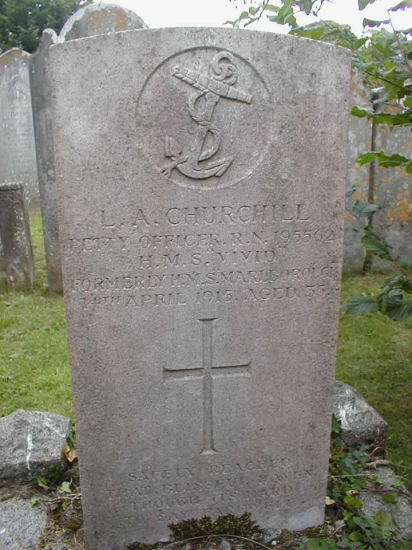 Petty Officer Leonard Arthur Churchill's Commonwealth War Graves Gravestone
He was buried with his wife at Kingskerswell (St. Mary's) Churchyard. Remembered on Kingskerswell Memorial, Seafront Memorial and St. James' Church Memorial Window, Teignmouth.
Grave Inscription reads:
"L.A.Churchill
Petty Officer R.N. 195562
H.M.S. Vivid
Formerly H.M.S. Marlborough
14th April 1915 aged 35
Safely Reached That Blissful Haven Though It's Hard To Say Farewell”.
 Download Leonard's Commonwealth War Graves Certificate
Leonard had an older brother Frank Churchill who also served on HMS Vivid, Frank died in 1917.
HMS Marlborough
Records show that in early 1915, Leonard served on HMS Marlborough. She was part of the Grand Fleet, enforcing the blockade of Germany by patrolling the Northern North Sea.
 Battleship HMS Marlborough. © IWM (Q 75208)
Leonard later transferred to HMS Vivid.
HMS Vivid
During the First World War HMS Vivid was a Royal Navy base at Devonport, a district of Plymouth.
A number of ships were renamed HMS Vivid whilst serving as depot ships for the base, HMS Cuckoo (launched in 1873), was a torpedo gunboat that was HMS Vivid between 1912 and 1920.
Some men served at the base for the duration of the war, others could be recorded as serving on HMS Vivid when between ships, on leave or on route to hospital etc.
The Stonehouse Naval Hospital was a mile from the Devonport base. For casualities coming to the UK from ships in the Atlantic, Stonehouse was the first large UK Naval hospital that they would reach.
![Arriving at the Naval Hospital Stonehouse by boat. <br />Cyber Heritage [Public domain]](/images/snippets/rnh3.jpg) Arriving at the Stonehouse Naval Hospital by boat. Cyber Heritage [Public domain]
Arriving at the Stonehouse Naval Hospital by boat. Cyber Heritage [Public domain]
There were a lot of casualties. Over 5000 British ships were lost in the First World War.
 A J5 Class submarine built in the Devonport yard during WW1
(later transferred to the Australian Navy) © IWM SP3096
The Royal Navy Devonport dockyard was a part of the base. During WW1 the yard built battle cruisers, cruisers, dreadnoughts and submarines.
These all used the cutting-edge technology of the time as did the battle ship HMS Warspite and the steam-driven J5 submarine shown here.
Experts in every related field were gathered to help develop and test new designs for the best possible vessels and weapons to equip them.
The most capable people available would have trained those responsible for training others in using these newly developed technologies.
 Battleship HMS Warspite. The battleship HMS Warspite (1913) was built at Devonport and was the most technically advanced ship of her era. She carried a company of more than 1,000 sailors and officers, holds more honours than any other in British naval history and served in both World Wars. At the Battle of Jutland in 1916, Warspite held off the German High Seas Fleet. © IWM (Q 75593)
Naval Trawlers
Vivid III was the part of the Devonport base relating to the Trawler Division.
At the outbreak of the First World War about 3000 civilian steam fishing trawlers were put into military service and more than 39,000 fishermen joined the Trawler Section of the Royal Naval Reserve to crew the ships they knew so well.
They cleared mines from sea routes, and attacked enemy submarines.
This was vitally important work, the Maritime Archeology Trust estimate that in 1918 alone, enemy U-boats sank 5896 British vessels.
Fishing vessels on Admiralty service played a role in something in the region of 20 per cent of all allied U-boat sinkings during 1918.
Fishermen, the Fishing Industry and the Great War at Sea: A Forgotten History.
By Robb Robinson page 161
H.M.S. Defiance
In the First World War, the Defiance was one of the Royal Navy's torpedo training schools at the Devonport Royal Navy Base.
 HMS Defiance. Photo - Cyberheritage

Leonard died of illness at The Stonehouse Royal Navy Hospital, Devonport on the 14 April 1915 aged 35.