Deck Hand William Thomas
HM Trawler Fulmar
Killed in Action
Date of Birth: 13 July 1886
Place of Birth: Mousehole, Cornwall
Date of Death: 17 January 1916
Buried: Remembered on Plymouth Naval Memorial and Seafront Memorial, Teignmouth, Devon.
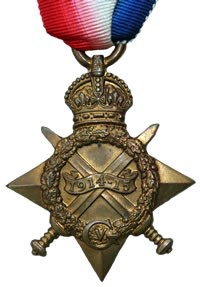
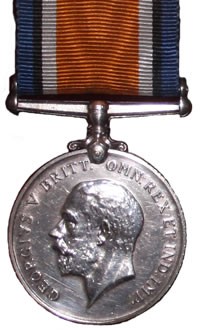
Awarded the 1914-15 Star, the British War Medal and the Victory Medal

Deck Hand William Thomas age 29.
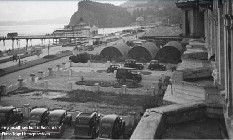
Born on 13 July 1886 in Mousehole, Cornwall, son of William and Esther Thomas. Shown on the 1901 census he was living with his parents at Penzance and working as a pageboy. He was married to Emily Hope Nathan, from Teignmouth, on 14 February 1904 in Penzance. William and his family were living at 2 Queen Street, Teignmouth on 1911 census where he is listed as fish dealer.
Called up at the beginning of the war William was serving with the Royal Naval Reserve, service no. DA/5132, on HM Trawler Fulmar.
He died as a result of enemy action when a mine exploded while on mine sweeping patrol duty in the Gulf of Sollum, situated off the north coast of Egypt, on 17 January 1916.
Remembered on Plymouth Naval Memorial and Seafront Memorial, Teignmouth, Devon.
HM Fulmar, Naval Trawler
Fulmar was built in 1899 and registered in Grimsby.
She was requisitioned by the Admiralty from her owner, William J Barrett of Grimsby in May 1915.
 HM Trawler Fulmar
The Fulmar was then armed and began service as a minesweeper, patrol vessel on 5 May 1916 based at Alexandria, Egypt.
She had been acting as an escort to the Latona which had laid two minefields off Bardia and Sollum, Egypt.
 Postcard view of HMS Latona
When the Fulmar failed to appear a search of the area was made, but there was no trace, although some floating wreckage was found on the 16th.
It was presumed that she had been lost when she ran into one of Latona's minefields taking all of her crew of 15 with her.
William Thomas of Teignmouth, aged 29 was one of those who died.
The officer in charge of the minesweeping group, Lieutenant Commander Hubert Bradyll of the Mimosa, took much of the blame for the loss.
It was found that he 'did not display the zeal and attention which was necessary' by failing to ensure that all patrolling vessels had been advised of the mines being laid. He was warned for his future conduct".
British Warship losses in the Ironclad Era 1860-1919
David Hepper
Naval Trawlers
At the outbreak of the First World War about 3000 civilian steam fishing trawlers were put into military service and more than 39,000 fishermen joined the Trawler Section of the Royal Naval Reserve to crew the ships they knew so well.
They cleared mines from sea routes, patrolled and attacked enemy submarines.
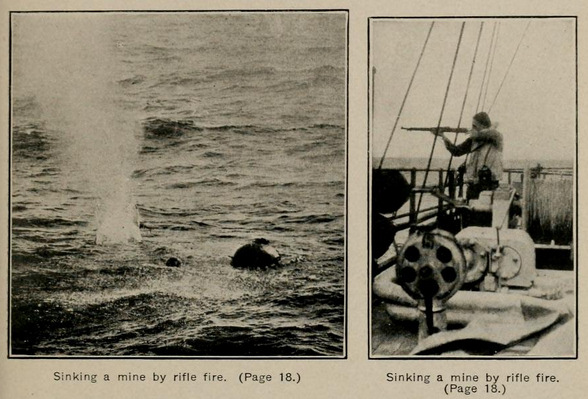 Sinking a mine by Riflefire. From The northern barrage : taking up the mines. 1920
This was vitally important work, the Maritime Archeology Trust estimate that in 1918 alone, enemy U-boats sank 5896 British vessels.
Fishing vessels on Admiralty service played a role in something in the region of 20 per cent of all allied U-boat sinkings during 1918.
Fishermen, the Fishing Industry and the Great War at Sea: A Forgotten History.
By Robb Robinson page 161
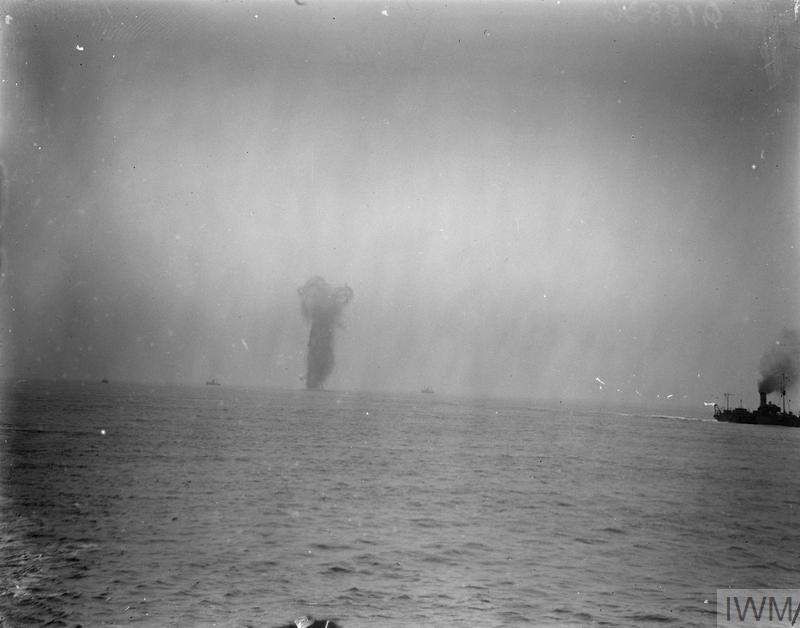 A mine exploded by rifle shots fired by sailors on a minesweeper off Harwich, Essex. © IWM (Q 18836)