Acting Bombardier Elias George Mitchell
"D" Battery, 121st Brigade, Royal Field Artillery, W/1016
Killed in Action
Date of Birth: 21 September 1894
Place of Birth: Teignmouth, Devon
Date of Death: 18 July 1917 aged 23
Buried: Buried in Bard Cottage Cemetery, West-Vlaanderen, Belgium. (III. C. 12)
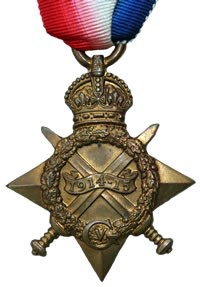
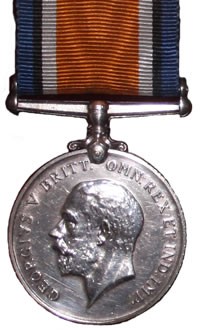
Awarded the 1914-15 Star, the British War Medal and the Victory Medal

Acting Bombardier Elias George Mitchell age 23.
Born in Teignmouth, Devon 21 September 1894 and baptised at St James’ Church on 26 June.
George was the son of Elias George, carter, and Rosina Mitchell of 24 Saxe Street.
In 1901 George was living with his parents and sister in Mountain Ash, Llanwonno, Glamorganshire, the family was registered under the surname of Clode.
George and his family were still living here in 1911 and he was working as a hewer in a nearby mine (the Nixon’s Navigation Colliery), their surname by now was Mitchell. (Elias George, his father was born and registered under the name Mitchell, but later took his step-father’s surname of Clode.)
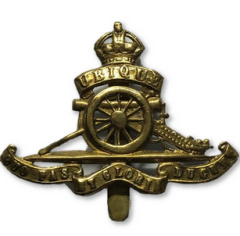 Royal Artillery Cap Badge
Known as George on his military records, he served with "D" Battalion, 121st Brigade, Royal Field Artillery, service number W/1016, his war gratuity indicates that he enlisted in the month from 19 March 1915.
George was killed in action on 18 July 1917.
Buried in Bard Cottage Cemetery, Belgium.
Grave Inscription reads: “For ever with the Lord”.
 Download commemorative certificate
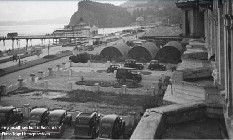
 Bard Cottage cemetery, Belgium. Courtesy of CWG
Miskin Son’s Heroic Death
An only son of Miskin parents, Mr. and Mrs. George Mitchell, 12 Glancynon Street, Miskin, has fallen in action. Last week they received information that Bomb. Geo. Mitchell. R.F.A., had fallen in France. The following letter was received from his officer:
“I regret to advise you of the death in action of your son George. This occurred yesterday evening (July 18th). He was struck by a piece of shell and died almost instantly, losing consciousness the moment he was hit. He was not in any way disfigured. We buried him in a British Cemetery this afternoon, officers and men attending to pay their last respect.
Your son died the death of a hero. When he heard a shell coming he shouted to the man next to him to look-out, and then threw himself across the other man, thereby saving the latter’s life by receiving the piece of shell in his own body.
Such a spirit of sacrifice cannot be too highly praised, and we in the Battalion are indeed proud of him. We shall feel the loss of your son more than we can say. He served with us ever since we came to this country, Dec., 1915, and I know what splendid qualities were his. He was very popular with all officers and a true comrade to all the men, and we are all quite disheartened at his death.
I understand he was your only son, which makes his death all the more sad, but hope you will find a little compensation in the thought that he gave his life for his country.”
The Aberdare Leader, 4 August 1917