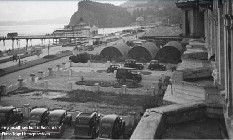
Miss Lilian Anne Widdicombe
Nurse, Voluntary Aid Detachment (VAD), Queen Alexandra's Imperial Military Nursing Service (QAIMNS)
Date of Birth: c. 1884
Place of Birth: Cambridge
Date of Death: Quarter 3 1953
Buried: Died in Plymouth, Devon
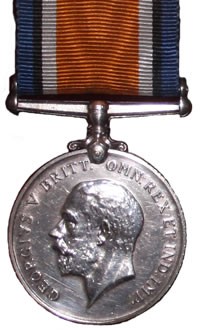

Awarded the British War Medal and the Victory Medal
Miss Lilian Anne Widdicombe of 5, Belgrave Terrace, Teignmouth, Devon.
Lilian's paternal grandparents and parents came from Devon where they held farmland in Stoke Gabrielle. The family moved to Cambridge where Lilian was born and returned to Devon in later years.
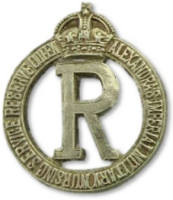 Q.A.I.M.N.S. collar badge
In 1911 Lilian Widdicombe was a visitor of Eliza Cleave and her mother Eliza Ellen Cleave at 51 Abbotsbury Road, Newton Abbot, Devon.
When Lilian engaged with VAD her address was 5, Belgrave Terrace, Teignmouth, Devon.
From 23rd November to April 1919, Lilian worked as a Queen Alexandra's Imperial Military Nursing Service (Q.A.I.M.N.S) nurse on detachment to VAD in Military Hospitals.
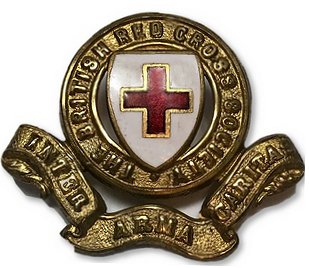 VAD hat badge
Lilian initially served at the Voluntary Aid Hospital Newton Abbot, then briefly at Sisters Hospital, Vincent Square, London before transferring to The Hospital Ship Brittanic. She later served at military hospitals in Devonport, Bournemouth and Trouville in France.
Lillian Ann Widdicombe's death was registered in Plymouth, Devon in the 3rd quarter of 1953.
All of Lilian's siblings survived the First World War.
The Hospital Ship Brittanic
The British used many hospital ships in the First World War (over 34 just in the Gallipoli area). The Brittanic was the largest. It was a sister ship to the Titanic, built after the Titannic, slightly larger with revisions including being equipped with sufficient lifeboats to accommodate both passengers and crew.
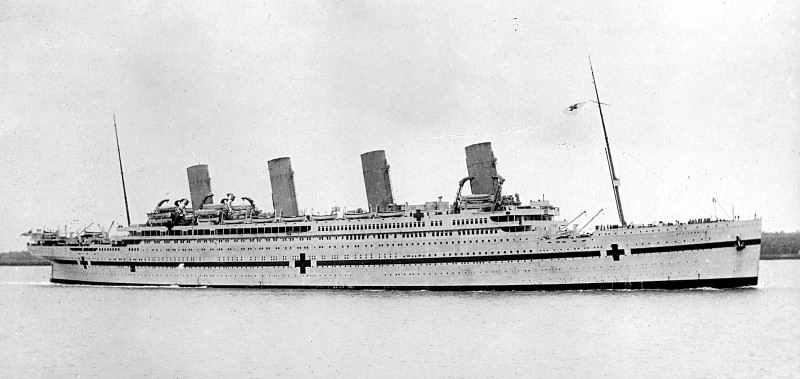 Britannic. Allan C. Green (1900). State Library of Victoria. A.N H91.325/996 Public Domain
The Brittanic had a capacity for 4000 patients.
On 21 November 1916, the Brittanic was on its sixth trip of returning the sick and wounded from the Middle East to the UK, when she struck a mine in the Aegean Sea and sank in only 55 minutes (even more swiftly than the Titanic had done four years earlier).
Lilian Anne Widdicombe was one of the crew of VAD nurses on board when the Brittanic sank. Lilian survived.
No, 72 General Hospital in Trouville, France
Lilian then served in military hospitals in Devonport and Bournemouth before boarding ship again in December 1917 for the port of Le Havre in France, on her way to No, 72 General Hospital in Trouville.
 A ward in a Hospital in France. © IWM (Q 8124)
This was a new hospital that could hold 2500 patients, Lilian was part of the initial staff.
No. 72 General Hospital was a Base Hospital, a part of the casualty evacuation chain, further back from the front line than the Casualty Clearing Stations but like the other military hospitals it was subject to bombing.
The Matron-in-Chief, BEF visit to the new No. 72 hospital
There are two hospitals already established and a third unit in the making, all composed of 2500 beds, entirely hutted, with fine accommodation for officers, Nursing Sisters and men.
The hospital is built in self-contained blocks of 250 beds, each a little hospital in itself. Each unit has accommodation for 100 officers and the rest is for men. They have most splendid mess, dining rooms, kitchens, store-rooms, a great big reception hut and a good administrative block.
The Sisters’ quarters are first-rate in every respect – a great big mess and ante-room and accommodation for 125 people in cubicles, all under cover and connected by corridors. There are 4 bath-rooms only. All the out-houses, kitchens, etc. are first-rate, similar to those in our other units but larger in comparison.
The unit is lighted with electricity and heated with coal stoves, and when the road is made and they have got rid of the mud, it will be first-rate. It is situated on the top of a hill. At the time of the visit 72 General Hospital had 1600 patients and they were taking in at 73 General Hospital the next day. They are beginning to lay out the grounds and are going to have large vegetable gardens.”
The official diary of the Maud McCarthy, Matron-in-Chief, BEF
Read more
Lilian served at No. 72 General Hospital at Trouville until 23rd February 1918 then transferred to a Women's Auxillary Hospital, France where she stayed until April 1919.
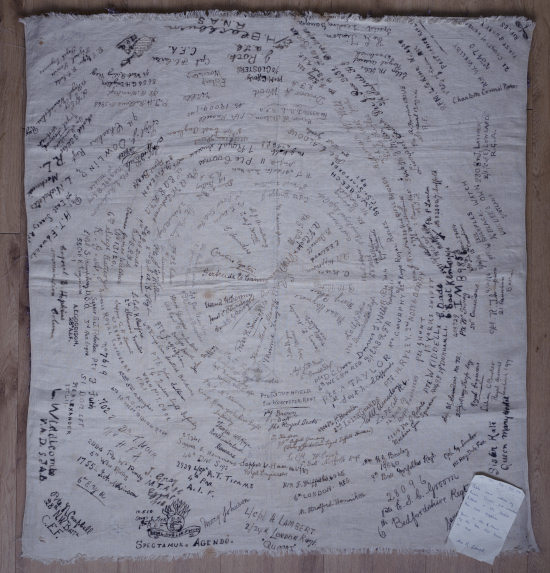 Tablecloth signed by patients and staff at Harleston hospitals in WW1.
With kind permission of the Oxford University-led Lest We Forget project
Tablecloth discovered in Harleston, Norfolk
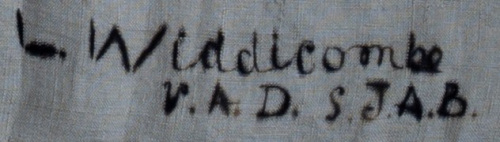 L. Widdicombe signature on the Harleston tablecloth
A signature for L. Widdecombe V.A.D. S.J.A.B (Voluntary Aid Detachment, St John's Ambulance Brigade) was found on a linen tablecloth signed by many WW1 soldiers who stayed at the two Red Cross hospitals in Harleston, Norfolk.
Read more at http://lwf.it.ox.ac.uk/s/lest-we-forget/item/3459
Voluntary Aid Detachment (VAD) Records
Date of engagement with VAD: 12th October 1916 to transfer.
Rank: Nurse.
Service rendered at:
Voluntary Aid Hospital Newton Abbot 23rd November 1914 to 1916
Sisters Hospital, Vincent Square, London. 12th October 1916 to transfer.
Hospital Ship, Britannic. October 1916 to transfer.
Military Hospital, Devonport 26th January 1917 - 26th July 1917.
Mont Dore Hospital, Bournemouth 5th September 1917 to transfer.
No. 72 General Hospital, Trouville, France. 22nd December 1917 to 23 February 1918
Women's Auxillary Hospital, France, 23rd February 1918 to April 1919
Voluntary Aid Detachment (VAD) Cards
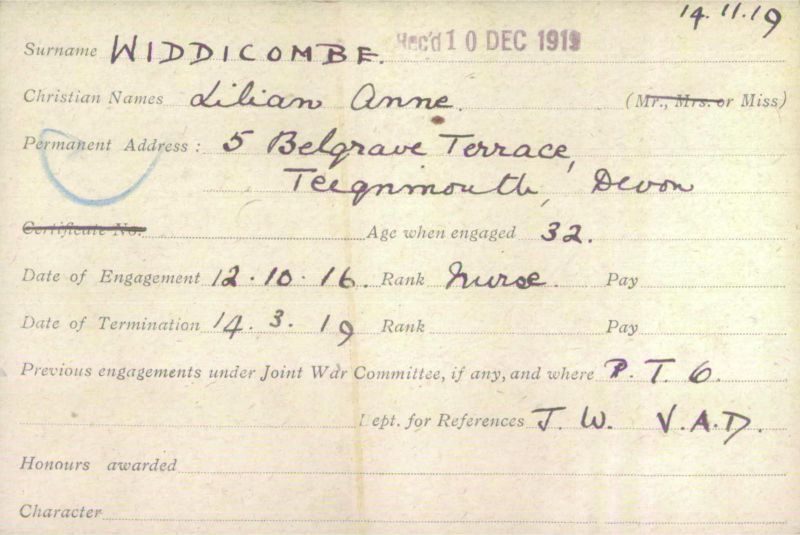 Voluntary Aid Detachment (VAD) Card. ©2018 British Red Cross (CC BY-NC 2.0 UK)
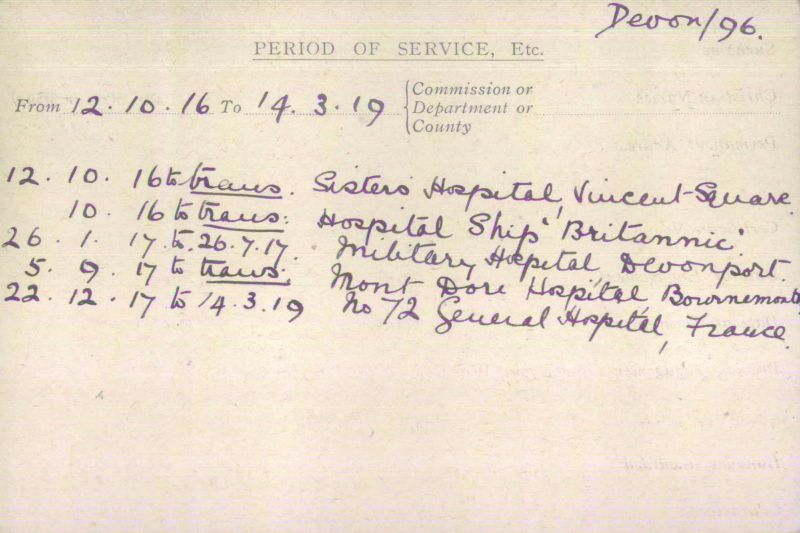 Voluntary Aid Detachment (VAD) Card. ©2018 British Red Cross (CC BY-NC 2.0 UK)
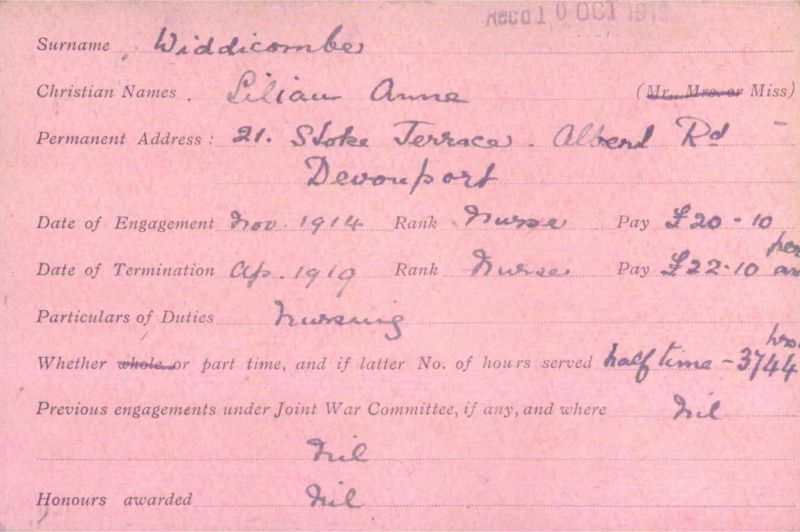 Voluntary Aid Detachment (VAD) Card. ©2018 British Red Cross (CC BY-NC 2.0 UK)
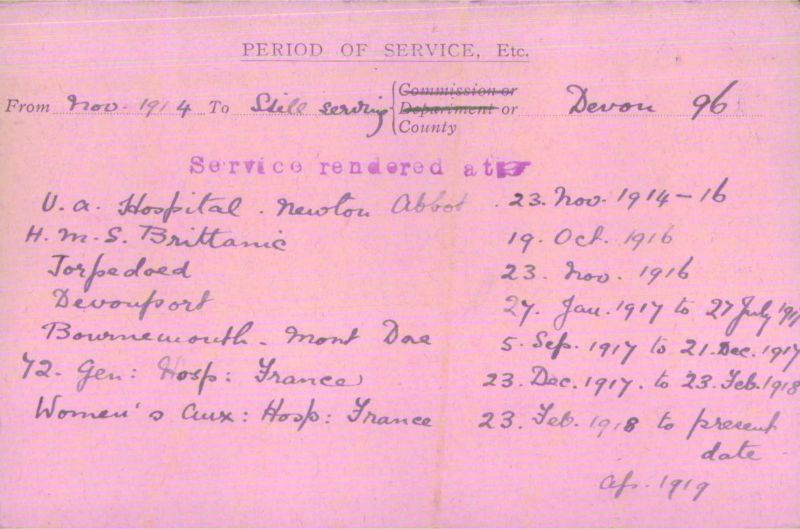 Voluntary Aid Detachment (VAD) Card. ©2018 British Red Cross (CC BY-NC 2.0 UK)