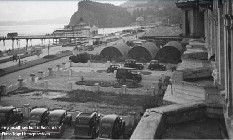
Private William James Ponsford
24th Field Ambulance, RAMC, 1614 and 457045
Date of Birth: 31st of March 1894
Place of Birth: Teignmouth, Devon
Date of Death: 1st quarter 1982
Buried: Died at Winchester, Hampshire
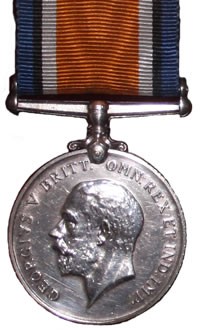

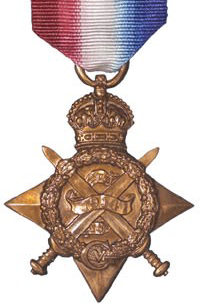
Awarded the British War Medal, the 1914-15 Star, and the Victory Medal
William was the son of Richard William Ponsford, Master Baker, and Annie M Ponsford (nee Hamlyn).
In 1901, the Ponsford family were living at 12, Northumberland Place, Teignmouth, Devon.
| Annie E Ponsford 1893 | William J Ponsford 1894 |
| Richard H Ponsford 1897 | Hamlyn Ponsford 1899 |
| Hilda Ponsford 1901 |
In 1911 the Ponsford family had moved to 55, Bitton Street, Teignmouth, Devon. William was a Baker and Confectioner. They had a niece staying with them, Henrietta Elizabeth Hamp, who was a Domestic Shop Assistant, and an Uncle of Richard, William Smerdon, 1838, a Retired Farmer.

William joined the 24th Field Ambulance, Royal Army Medical Corps, (Territorial Army) on the 2nd of May 1912 as a nursing orderly. His document was one of the burnt documents that happened during WW2.
The Burnt Documents are the remained of the 6.5 million WW1 soldiers' papers which were destroyed by fire in September 1940. An incendiary bomb landed on the War Office Record Store in Arnside Street, London.
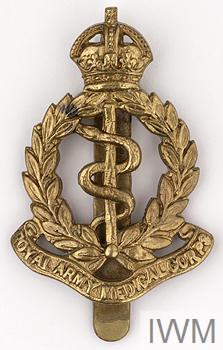 Royal Army Medical Corps Cap Badge © IWM (INS 8067)
William was called up at the start of WW1 due to his previous training in the Territorial Army. On the 11th of October 1914, William was assigned to the 1st Wessex which was attached to the 8th division.
William left Southampton on the 4th of November 1914 and landed at Le Havre, France on the 5th of November 1914. They were part of the British Expeditionary Force (BEF).
1915
From the end of 1914, and in 1915, BEF attacks centred around the Ypres Salient. Then in September 1915, six divisions took part in the Battle of Loos – notable for the first use of poison gas by the British.
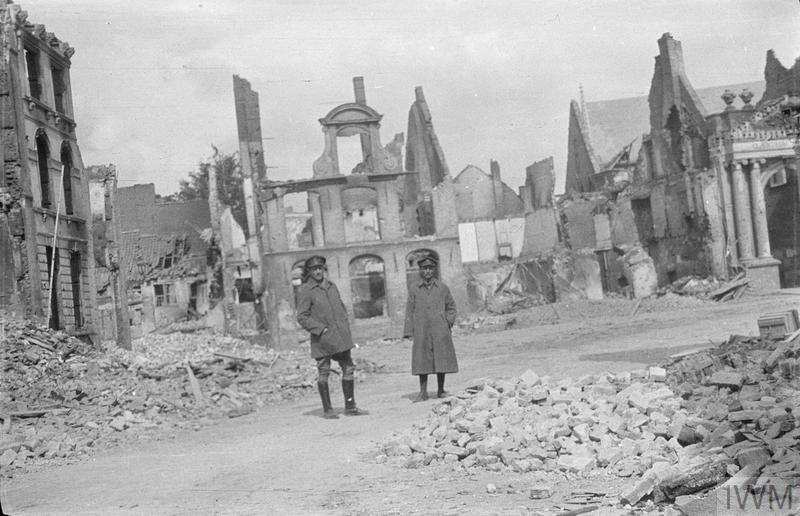 The Second Battle of Ypres. April-May 1915 © IWM Q 56727
1916
In 1916 the BEF had moved into the Picardy region of France. The Battle of the Somme dominated British military activity for the year.
 The Battle of the Somme, July-November 1916 © IWM Q 3990
Allied forces attempted to break through the German lines along a 25 miles (40 km) front north and south of the River Somme in northern France. On the first day on the Somme, the BEF suffered 59,000 casualties.
After the war a final tally counted 419,654 British and 204,253 French killed, wounded, or taken prisoner; of the 623,907 total casualties, 146,431 were either killed or missing.
1917
In 1917 the BEF's attacks moved along the front, they operated in the Pas-de-Calais during the Battle of Arras.
 The Battle Of Arras, April-May 1917 © IWM Q 5258
They then concentrated in Belgium for the Battle of Messines and the Battle of Passchendale and ended the year back in the Pas-de-Calais for the Battle of Cambrai.
1918
In the spring of 1918, the BEF came under attack both in Flanders and on the Somme during the German Spring Offensive.
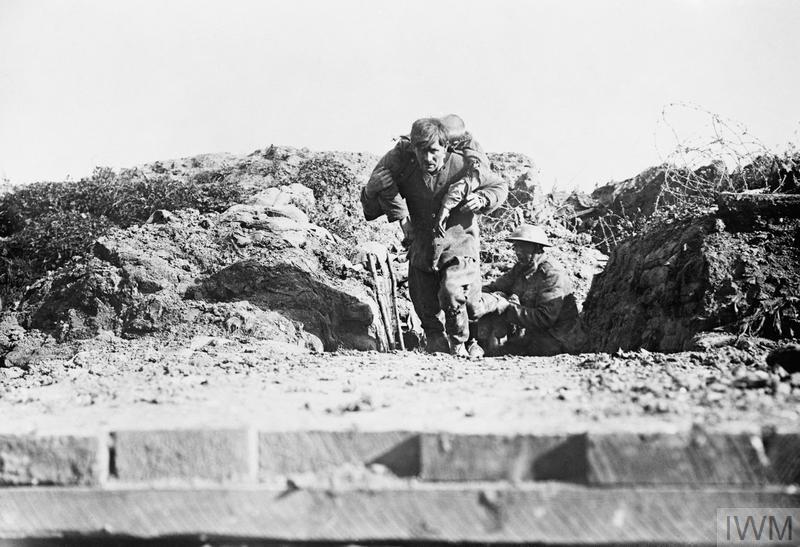 The Battle of the Somme © IWM Q 753
The Second Battle of the Somme represented the BEF response to the German attack. This in turn began the Hundred Days Offensive, which led to the eventual defeat of the German Army on the western front, after the First and Third armies broke through the Hindenburg Line at the Battle of the Canal du Nord.
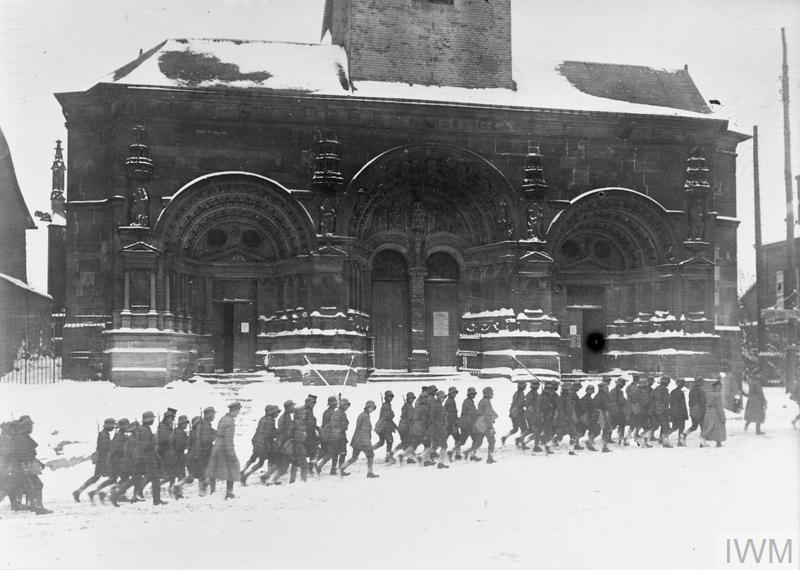 The German withdrawal to the Hindenburg Line, March-April 1917 © IWM Q 29904
This led to the final battle of the war in November 1918, the Battle of the Sambre by the First, Third and Fourth Armies and to the capture of Mons, 11 November 1918, by the First Army.
Further information can be found on the 24th (1st Wessex) Field Ambulance at The Keep Military Museum.
A Royal Army Medical Corps Field Ambulance
A Field Ambulance was not a single vehicle, but an entire mobile hospital that served in the combat zone.
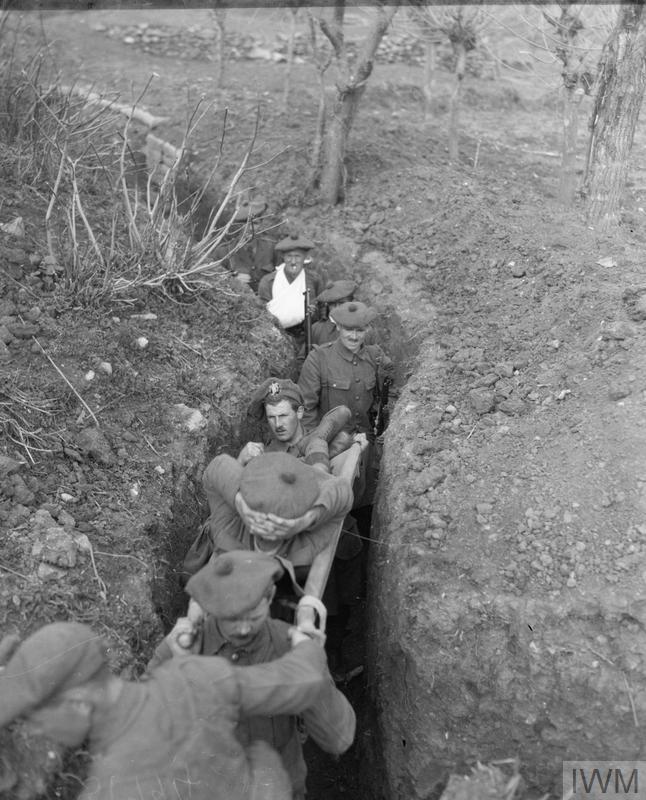 Casualties from a Scottish infantry battalion of 77th Brigade being evacuated along a communication trench outside Salonika, February 1916.© IWM (Q 31794)In the First World War, at the Front Line in battle there were often vast numbers of casualties requiring immediate treatment.
The Royal Army Medical Corps (RAMC) operated a system that immediately addressed a patient's critical injuries near the Front, then evacuated him to a medical unit in a safer area.
To achieve this goal the RAMC had units consisting of 10 officers and 224 men. The entire company was called a Field Ambulance.
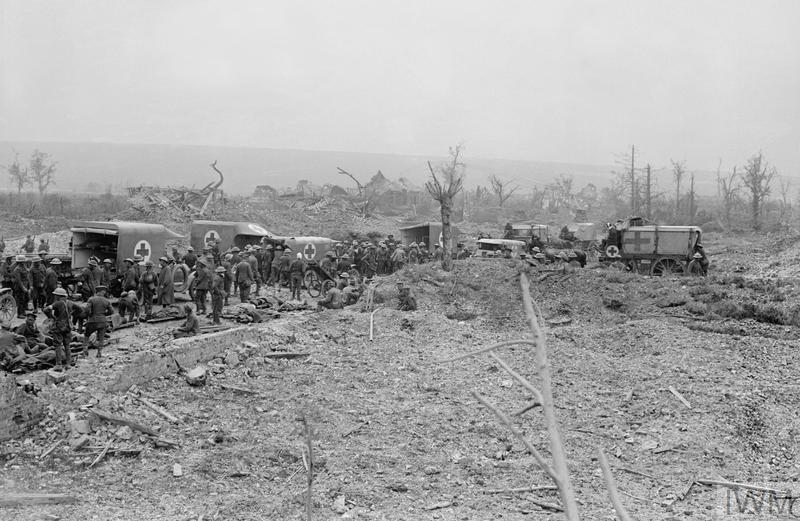 Motor ambulances and horse-drawn ambulance wagons of the RAMC collecting wounded on the Western Front © IWM (Q 9177)
The men were detailed as stretcher bearers, nursing orderlies, ambulance drivers, cooks, sanitation crew and to manage and distribute stores and water etc. The unit was divided into three equal sections, each of which could be self-sustainable, with its own tented areas, men and equipment.
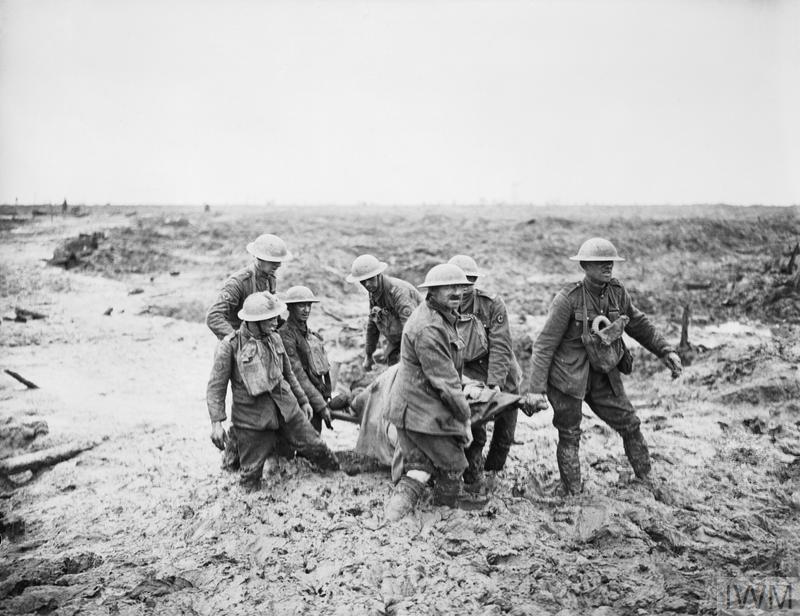 Stetcher Bearers in WW1 © IWM (Q 5935)
Each Field Ambulance had to be moved to where the combat was most intense and set up there.
Men of the Army Supply Company (ASC) were attached to assist with transport.
A Field Ambulance had 66 horses and 23 wagons. After the first year of the war transport included 7 motor vehicles and a maintenance wagon.
A full strength Field Ambulance unit in the First World War had a "capacity" for 150 casualties. In times of intense battle the unit would often treat a great many more.
RAMC officers and men were unarmed, they did not carry weapons (or ammunition). Over 6,873 RAMC personnel were either killed in action or died of wounds in WW1.
Through the work of the RAMC 1.6 million wounded men were returned to the firing line to fight again.
 RAMC personnel giving a wounded man water from a petrol tin in an abandoned trench. © IWM (Q 9177)
In the 1st quarter of 1924, William married Ethel E Ellery at the Congregational Church, Dawlish Street, Teignmouth, Devon. Ethel lived at Belgrave Terrace, Teignmouth, Devon. Ethel's father was a Teignmouth postman.
In the 1939 register, William was living at Sunny Bank East Hill, Winchester, Hampshire. William was a Master Baker and Confectioner. Ethel E Ponsford born on the 25th of August 1898. They had a son, Dennis D Ponsford born on the 18th of March 1925, at school. Also living with them was Ethel's mother who was windowed, Mary E Ellery, born 25th of September 1869.
William died in the 1st quarter of 1982 at Winchester, Hampshire.
The story and some facts plus family photographs have been provided by Alison Grimshaw