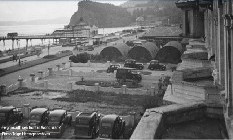
Lieutenant Colonel Percy Harrison Fawcett DSO, (MiD)
Royal Garrison Artillery (RGA), formerly Royal Field Artillery (RFA)
Unknown
Date of Birth: 18th of August 1867
Place of Birth: Torquay, Devon
Date of Death: Unknown. Last contact in 1925
Buried: Lost in the Brazilian jungle
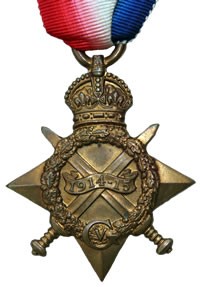
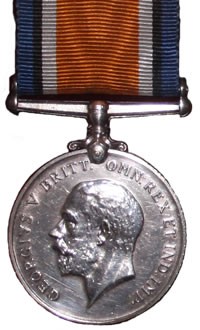
Awarded the Distinguished Service Order, Mentioned in Despatches (x3), the 1914-15 Star, the British War Medal, and the Victory Medal
 Distinguished Service Order
Percy Harrison Fawcett was born on the 18th of August 1867 at Torquay, Devon, to parents, Edward Boyd Fawcett, born 1840, India, Myra Elizabeth Fawcett (née MacDougall) born 1841, India.
The parents are buried in the Teignmouth Old Cemetery, plot V124.
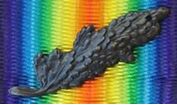 Mentioned in Despatches (3 Citations)
| Percy Harrison Fawcett and his siblings | |
| Edward D Fawcett 1867 | Percy H Fawcett 1867 |
| Myra E Fawcett 1870 | Blanche H Fawcett 1871 |
| Beatrice M Fawcett 1877 | |
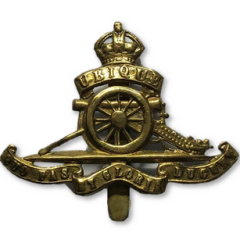 Royal Artillery Cap Badge

In 1871, Percy and his family were living in Dunolly, St Mary Church, Torquay, Devon. The family employed five servants.
In 1881, the family had moved to 3, Barnpark Terrace, Teignmouth East.
 Barnpark Terrace, Teignmouth circa 1870
Percy Harrison Fawcett DSO, awarded in 1917, was a British geographer, artillery officer, cartographer, archaeologist, and explorer of South America. Fawcett disappeared in 1925 (along with his eldest son, Jack, and one of Jack's friends, Raleigh Rimmell) during an expedition to find "Z" - his name for an ancient lost city which he and others believed existed in the jungles of Brazil.
Fawcett received his early education at Newton Abbot Proprietary College, alongside the sportsman and journalist Bertram Fletcher Robinson. Fawcett's father, who had been born in India, was a Fellow of the Royal Geographical Society (RGS), while his elder brother, Edward Douglas Fawcett (1866–1960), was a mountain climber, an Eastern occultist, and the author of philosophical books and popular adventure novels.
Fawcett attended the Royal Military Academy, Woolwich as a cadet, and was commissioned as a lieutenant of the Royal Artillery on 24 July 1886.
 View of the former Royal Military Academy in Woolwich CC BY NC 4.0 Author Kleon3
On 13 January 1896, he was appointed adjutant of the 1st Cornwall (Duke of Cornwall's) Artillery Volunteers and was promoted to captain on 15 June 1897.
He later served in Hong Kong, Malta, and Trincomalee, Ceylon, where he met his future wife Nina Agnes Paterson, whom he married in January 1901 after having previously ended their engagement. They were living at 2, Coverdale, Richmond-upon-Thames, Surrey. They had two sons, Jack (1903-1925), and Brian (1906–1984), and one daughter, Joan (1910–2005).
Fawcett joined the Royal Geographical Society in 1901, in order to study surveying and mapmaking. Later, he worked for the British Secret Service in North Africa while pursuing the surveyor's craft. He served for the War Office on Spike Island, County Cork from 1903 to 1906, where he was promoted to Major on the 11th of January 1905.
He became friends with authors H. Rider Haggard and Arthur Conan Doyle; the latter used Fawcett's Amazonian field reports as an inspiration for his novel The Lost World.
Fawcett's first expedition to South America was in 1906 (he was seconded for service there on the 2nd of May) when at the age of 39 he traveled to Brazil to map a jungle area at the border of Brazil and Bolivia at the behest of the Royal Geographical Society.
The Society had been commissioned to map the area as a third party unbiased by local national interests. He arrived in La Paz, Bolivia in June. While on the expedition in 1907, Fawcett claimed to have seen and shot a 62-foot (19 m) long giant anaconda, a claim for which he was ridiculed by scientists.
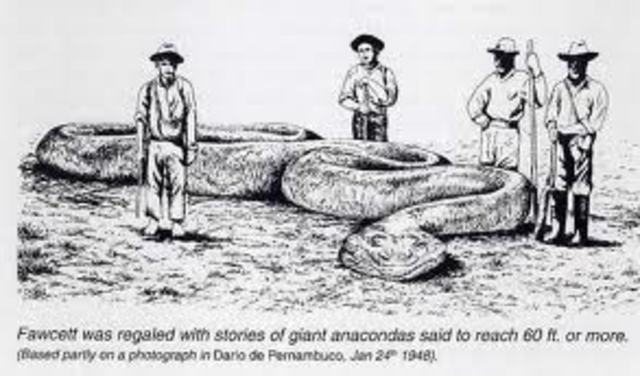 A 62 foot anaconda drawing
He reported other mysterious animals unknown to zoology, such as a small cat-like dog about the size of a foxhound, which he claimed to have seen twice, and the giant Apazauca spider which was said to have poisoned a number of locals.
Fawcett made seven expeditions between 1906 and 1924. He was mostly amicable with the locals through gifts, patience, and courteous behaviour. In 1908, he traced the source of the Rio Verde (Brazil) and in 1910 made a journey to Heath River (on the border between Peru and Bolivia) to find its source, having retired from the British army on the 19th of January.
After a 1913 expedition, he supposedly claimed to have seen dogs with double noses. These may have been double-nosed Andean tiger hounds.
 A double-nosed Andean tiger hound
Based on documentary research, Fawcett had by 1914 formulated ideas about a "lost city" he named "Z" (Zed) somewhere in the Mato Grosso region of Brazil.
He theorized that a complex civilization once existed in the Amazon region and that isolated ruins may have survived. Fawcett also found a document known as "Manuscript 512", written after explorations made in the sertão of the state of Bahia, and housed at the National Library of Rio de Janeiro.
It is believed to be by Portuguese Bandeirante João da Silva Guimarães, who wrote that in 1753 he'd discovered the ruins of an ancient city that contained arches, a statue, and a temple with hieroglyphics; the city is described in great detail without providing a specific location. This city became a secondary destination for Fawcett, after "Z". (See Fawcett's own book, Exploration Fawcett.)
 Orlando Villas Boas with two Kalapalo Indians with the supposed bones of Fawcett. 1952 ( CC BY SA 3.0 )
At the beginning of the First World War Fawcett returned to Britain to serve with the Army as a Reserve Officer in the Royal Artillery, volunteering for duty in Flanders, and commanding an artillery brigade despite being nearly 50 years old.
He was promoted from Major to Lieutenant-Colonel on the 1st of March 1918, and received three mentions in despatches from Douglas Haig, in November 1916, November 1917, and November 1918, and was also awarded the Distinguished Service Order in June 1917.
After the war, Fawcett returned to Brazil to study local wildlife and archaeology. In 1920, he made a solo attempt to search for "Z" but ended it after suffering from a fever and shooting his pack animal. In 1925, with funding from a London-based group of financiers known as the Glove, Fawcett returned to Brazil with his eldest son Jack and Jack's best and longtime friend, Raleigh Rimell, for an exploratory expedition to find "Z".
 1924 electoral register for Percy and his family in Stoke Canon, Devon
Fawcett left instructions stating that if the expedition did not return, no rescue expedition should be sent lest the rescuers suffer his fate. Fawcett was a man with years of experience traveling and had taken equipment such as canned foods, powdered milk, guns, flares, a sextant, and a chronometer.
His travel companions were both chosen for their health, ability, and loyalty to each other; Fawcett chose only two companions in order to travel lighter and with less notice to native tribes, as some were hostile towards outsiders. On 20 April 1925, his final expedition departed from Cuiabá. In addition to his two principal companions, Fawcett was accompanied by two Brazilian laborers, two horses, eight mules, and a pair of dogs.
 Jungle sunrise - Pixabay free to distribute
The last communication from the expedition was on the 29th of May 1925 when Fawcett wrote, in a letter to his wife delivered by a native runner, that he was ready to go into unexplored territory with only Jack and Raleigh. They were reported to be crossing the Upper Xingu, a southeastern tributary river of the River Amazon.
The final letter, written from Dead Horse Camp, gave their location and was generally optimistic. Many people assumed that local Indians killed them, as several tribes were nearby at the time: the Kalapalos, the last tribe to have seen them, the Arumás, the Suyás, and the Xavantes whose territory they were entering.
According to explorer John Hemming, Fawcett's party of three was too few to survive in the jungle, and his expectation that his Indian hosts would look after them was likely to have antagonized them by failing to bring any gifts to repay their generosity.
The Kalapalo have an oral story of the arrival of three explorers which states that the three went east, and after five days the Kalapalo noticed that the group no longer made campfires. The Kalapalo say that a very violent tribe most likely killed them. However, both of the younger men were lame and ill when last seen, and there is no proof that they were murdered. It is plausible that they died of natural causes in the Brazilian jungle.
 Mules on a pass - Pixabay free to distribute
From Dead Horse Camp, Fawcett wrote to his wife about the hardships that he and his companions had faced, his coordinates, his doubts in Raleigh Rimmel, and Fawcett's plans for the near future. He concludes his message with, “You need have no fear of any failure...”.
One question remaining about Dead Horse Camp concerns a discrepancy in the coordinates Fawcett gave for the camp. In the letter to his wife, he wrote: "Here we are at Dead Horse Camp, latitude 11 degrees 43' South and longitude 54 degrees 35' West, the spot where my horse died in 1920" (11°43′S 54°35′W).
However, in a report to the North American Newspaper, Alliance he gave the coordinates as 13°43′S 54°35′W. The discrepancy may have been a typographical error. However, he may have intentionally concealed the location to prevent others from using his notes to find the lost city. It may have also been an attempt to dissuade any rescue attempts; Fawcett had stated that if he disappeared, no rescue party should be sent because the danger was too great.