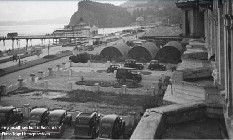
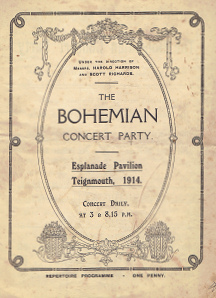
 Pavilion Concert Party Notice
Prior to World War 1 a number of touring theatre companies visited Teignmouth throughout the year and concert parties took place on the Den and on the beach.
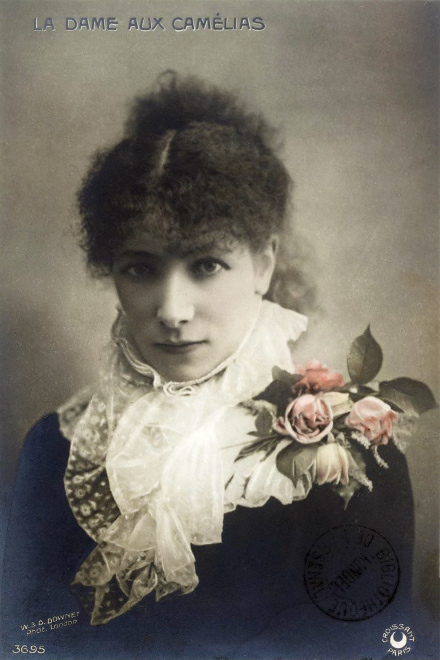 Postcard Sarah Bernhardt as Marguerite Gautier in Camille "La Dame aux Camellias" (Public Domain)
The Riviera Cinema, previously the East Teignmouth Conservative Club, opened in 1912.
The cinema presented short films twice nightly initially, A Charlie Chaplin film was screened at the Riviera Cinema in 1915.
It later showed longer films including "La Dame aux Camellias" starring Sarah Bernhardt.
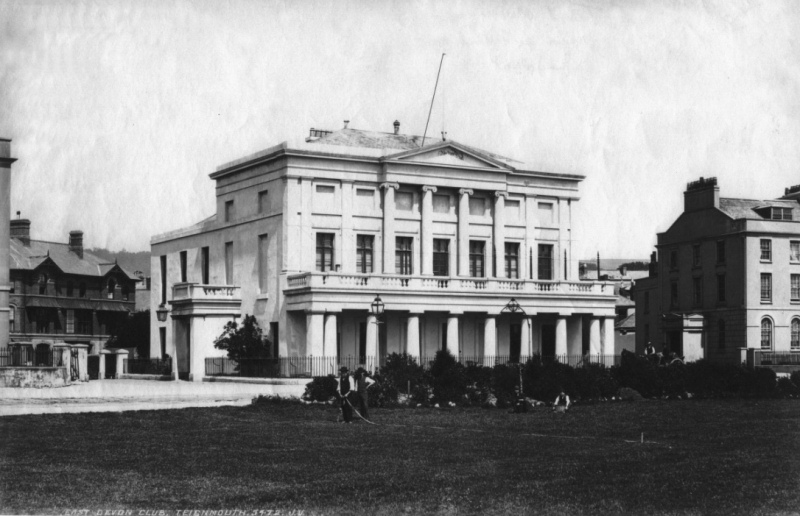 Teignmouth Rivera cinema (Previously East Teignmouth Conservative Club)
The Teignmouth Operatic Society staged productions each year up to and including 1914, and then, as far as we know, did not perform again till 1923.
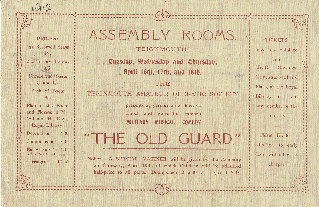
The venues for entertainment were the Pavilion on the Pier, the Winter Gardens Theatre, the Assembly Rooms at the London Inn, and the concert Pavilion on the Den.
There were several opportunities for physical recreation, such as Bowling, Rugby, Badminton, Horse Riding, Tennis and Swimming.
During the first two years of the war entertainment appears to have been curtailed. Whilst the Lawn Tennis Tournament went ahead in Bitton in 1914 the bonfire night celebrations that year were cancelled. and a carol concert was recorded in the Christmas of 1915.
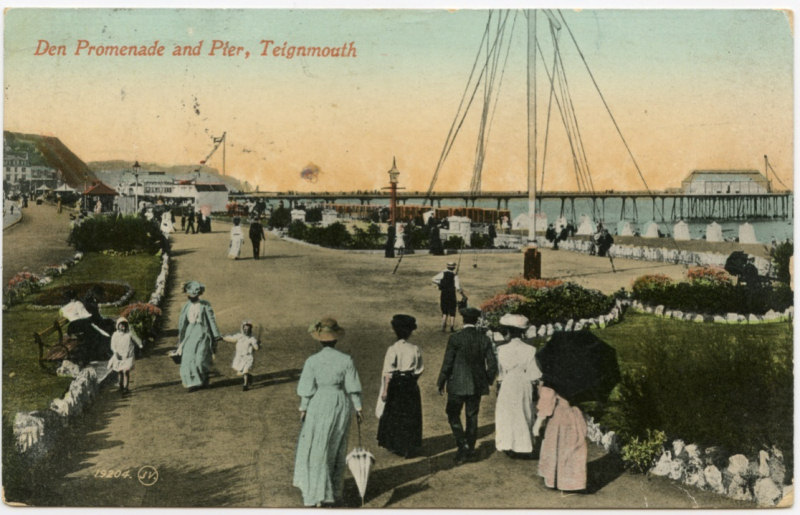 Postcard:, the Promenade and Pier, Teignmouth
In 1916 a number of events were held, most of which were to raise money for war-related causes. These included
'a grand theatrical and variety entertainment in the Assembly Rooms on 2nd March to provide funds for the Teignmouth Women's Work Depot who have sent away thousands of sand bags.'
"A concert organised by Mr C Tapper in the Teignmouth Assembly rooms in aid of funds to provide comforts for British prisoners in Germany."
"A concert … given by eminent Belgian artistes in aid of the British Society for the Relief of Wounded Belgian Soldiers. Every item was loudly applauded and a large audience showed every manifestation of delight at the really admirable programme presented, the items being of a high standard of excellence."
Poetry and song played a central part throughout the war, both as entertainment but also, at times, as a form of protest.