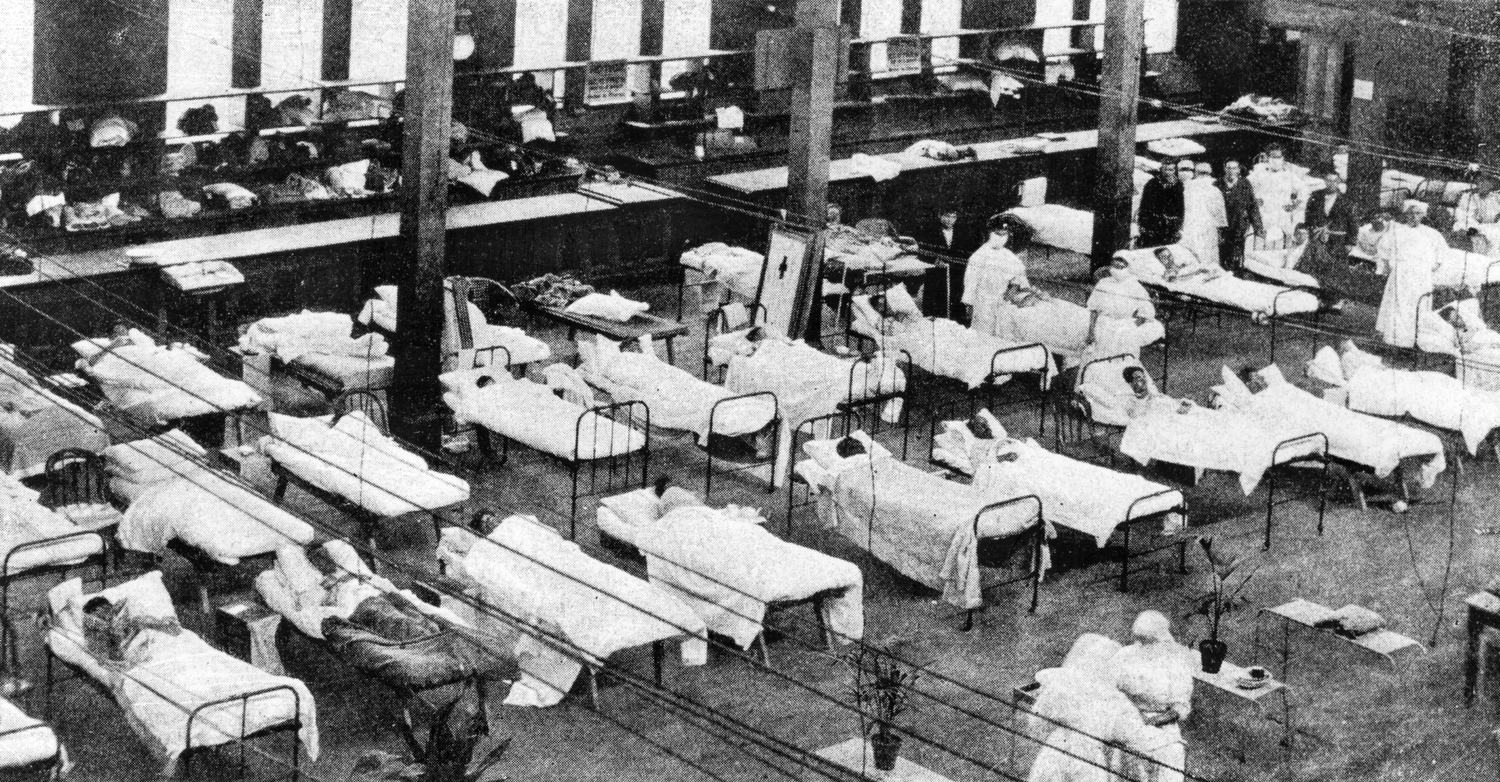
Hospital Beds in a Museum building
1919 Influenza Pandemic
Museums Victoria
Petty Officer Edward J. Dodd
Submarine K11, Royal Navy, O/N J3662
Died from influenza
Date of Birth: 4th September, 1891
Place of Birth: Teignmouth
Date of Death: 5th November 1919 in Edinburgh, aged 26
Buried: Teignmouth Cemetery in Grave EE47
Petty Officer Edward John Dodd age 26. Born in 1892, the son of William, a fisherman, and Mary Dodd, West Teignmouth. In 1901 census he was living with his parents and his six brothers at 6 Mulberry Street. The family later moved to Luny House, Teignmouth. He married Kate Richards in 1915; formerly he was a member of the local rugby club.
Edward joined the Royal Navy, service number J3663 (Dev), on 4 September 1909 as a Boy Class II, he served right through the war continuously in the North Sea, and was serving on H M Submarine K11 when he became ill. He died from pneumonia following influenza on board Hospital Ship Garth Castle at Rosyth on 5 November 1918; his time of death is recorded at 3.15 am. Edward was buried in on 11 November in Teignmouth Cemetery and remembered on Seafront Memorial and St. James' Church Memorial Window, Teignmouth. Also remembered on Wesleyan Roll of Heroes.
Edward was one of eight brothers serving in the Royal Navy in WW1 in 1918.
In November 1915 the Teignmouth Post reported that the Dodd's of Luny House, Teign Street received a letter commending the fact that their seven sons were now all serving in the Royal Navy.
Influenza in the First World War
The influenza pandemic January 1918 – December 1920 (known as Spanish flu), resulted in the deaths of 50 - 100 million people around the world, more than three times the number of people who died in the fighting during WW1.
Many of the men who had served in the front line on both sides had lung damage due to having been exposed to poisonous gases and already had compromised immune systems, additionally both sides were blocking each other's trade routes, causing severe food rationing. The lack of nourishment and vitamins made people more vulnerable to the virus and contributed to the severity of the pandemic.
Investigative work by virologists identified one of the camps on the Western Front as being at the centre of the flu outbreak.
Troops deployed around the world spread the virus.
The Armistice on 11 November 1918 gave the virus an opportunity to spread further, as the soldiers went home carrying it with them.
People struck with illness often died within hours.
One physician wrote that patients with seemingly ordinary influenza would rapidly "develop the most viscous type of pneumonia that has ever been seen" and later when cyanosis appeared in the patients, "it is simply a struggle for air until they suffocate," (Grist, 1979).
Many medical personel died having contracted the virus whilst caring for their patients.
Warehouses, exhibition halls and other large spaces were turned into hospitals, as was the Museum Exhibition Hall shown below.