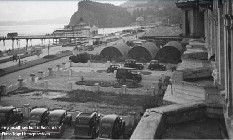
Corporal Frederick John Thick
Royal Engineers, Royal Garrison Artillery, Service number 94987
Date of Birth: 7th of September 1890
Place of Birth: Reading, Berkshire
Date of Death: 7th of July 1950
Buried: Paignton, Devon
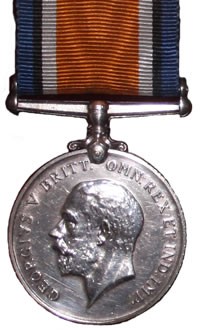

Awarded the British War Medal, the Victory Medal, and the Silver War Badge
In the 1901 census, Frederick and his family were living at 17, Dorothy Street, Reading St Giles, Reading, Berkshire. Mother, Caroline Thick, Widow, 1859, her occupation was Needlework, born Salisbury. Frederick had a brother, Bertram Joseph Thick, 1886, his occupation was Clerk Solicitors, born Reading, Berkshire.
In the 1911 census, the family had moved to 11, Third Avenue Walthamstow N E, Walthamstow, London. Both Frederick and Bertram Thick were Municipal Clerks.
WW1
The Royal Engineer became tunnelling companies, nicknamed "the Moles", were specialist units of the Corps of Royal Engineers within the British Army, formed to dig attacking tunnels under enemy lines during the First World War.
They designed and built the frontline fortifications, creating the cover for the infantry and positions for the artillery. It was in the hands of the technically skilled Royal Engineers to develop responses to chemical and underground warfare.
Preparation for the Battle of Arras, 1917. From October 1916 the Royal Engineers had been working underground, constructing tunnels for the troops in preparation for the Battle of Arras in 1917. Beneath Arras itself, there is a vast network of caverns called the boves, consisting of underground quarries and sewage tunnels.
The engineers came up with a plan to add new tunnels to this network so that troops could arrive at the battlefield in secrecy and in safety. The size of the excavation was immense. In one sector alone four Tunnel Companies of 500 men each worked around the clock in 18-hour shifts for two months.
Battles / Campaigns Vimy Ridge, 1917. The battle commenced on the 9th of April until the 12th of April 1917. Messines,1917. The battle commenced on the 7th of June 1917.
 Royal Engineers mine and counter-mine Messines Ridge which dominated Ypres blown up and stormed June 7th 1917 - National Army Museum, Out of Copyright
On the 17th of April 1918, Frederick married Maude Fraser at St. Mary the Virgin, Walthamstow, London. Their residence was 49, Hatherley Rd, Walthamstow, London.
On the 27th of May 1918, Frederick, 2nd Lieutenant, was attending an Officers Medical Board at Catterick Military Hospital.
On the 29th of June 1918, Frederick, 2nd Lieutenant, was awarded the Silver Badge. His address was shown as Oakbrook Cottage, Geltham Hill Road, Ashford, Middlesex.
After the war
By 1921, Frederick and Maude had moved to 5, Yannon Terrace, Exeter Road, Teignmouth.
In 1923 Kelly's Directory Frederick was shown as a Sanitary Inspector to The Urban District Council and Port Sanitary Authority. He was based at the Teignmouth Town Hall.
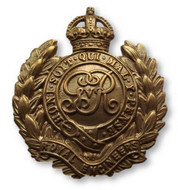 Royal Engineers
Cap Badge
 14th of January 1938 Exeter and Plymouth Gazette
The 1939 register shows him as a Chief Sanitary Employee and working with Civil Defense Decontamination.
At this point, he was living at 25 Yannon Terrace, Exeter Road, Teignmouth, Devon with Maude.
 20th of January Exeter and Plymouth Gazette
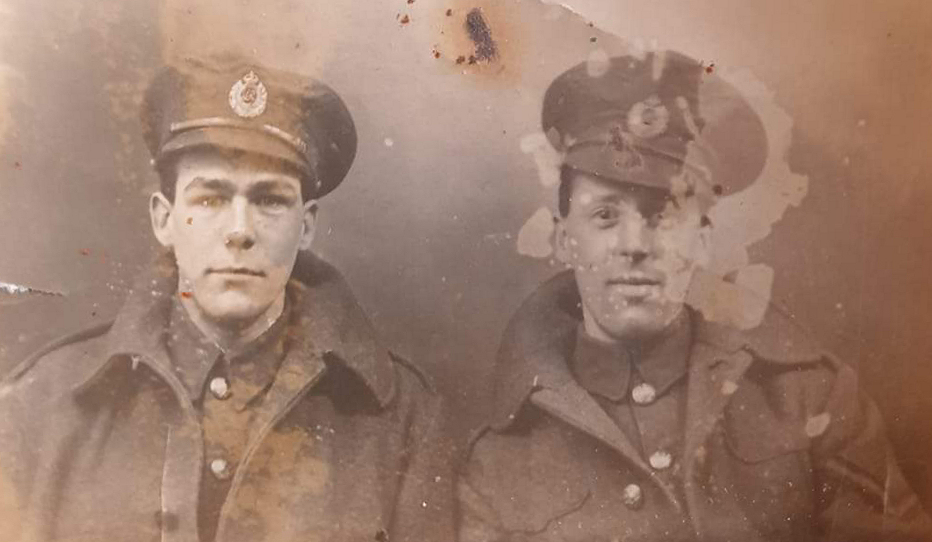 Frederick (left)with another member of the Royal Enginners. Photo is labelled Rouen 35 Rue de Carmes, 885. February 1916
When Frederick died on the 7th of July 1950, his probate shows he was living at Red Roof, 18, Eugene Road, Paignton, Devon. His effects were left to Maude Thick.